Dutch whisky
Everything about single malt from your own country
Dutch whisky
The Netherlands is known for jenever, beer and old grain jenever distilleries, not for whisky. Yet since 1996, serious whisky has been made in our country, and the Dutch whisky sector is growing rapidly. As of 2026, the Netherlands is home to over thirty distilleries that produce whisky, from professional single malt producers to hobbyists who've taken things a step too far. Whisky experts now equate the quality to that of Scottish single malts.
On this page you'll read what Dutch whisky is, which distilleries exist, how it's made and what sets it apart from Scottish or Irish whisky. We also explain why BUS Whisky holds a special place in this landscape.
What is Dutch whisky?
Dutch whisky is whisky that has been distilled, aged and bottled entirely in the Netherlands. For the official designation "whisky", European regulations apply: the distillate must age for at least three years in oak barrels of no more than 700 liters, and may not drop below 40% alcohol at bottling. Within these rules, every Dutch distillery has room for its own interpretation. Some producers opt for classic Scottish styles with imported malt and Scottish copper pot stills. Others experiment with local barley, special cask combinations or sustainable production processes. The result is a sector with enormous style variation, despite its relatively young history.
Within Dutch whisky you'll find three main types: Single malt is made from one hundred percent malted barley, in one and the same distillery. This is the most common form in the Netherlands. Rye whisky is made from rye and is rare, with Millstone being the best-known producer. Blended or grain whisky refers to blended forms and is less common in the Netherlands.
A brief history of Dutch whisky
The modern history of Dutch whisky begins in 1996, when Zuidam Distillers in Baarle-Nassau distills the first experimental batches of whisky. The first commercial Dutch single malt hits the market in 2006 under the name Millstone. Almost simultaneously, Us Heit in the Frisian town of Bolsward produces its own single malt, which is released in 2005 as Frysk Hynder.
After 2010, a second wave follows. Distilleries such as Kalkwijck (Eastmoor), De Drentsche Schans (Den Hool) and Sculte (Twentse whisky) launch their first Dutch whiskies. From 2015 onwards, a third generation emerges, including BUS Whisky in Loosbroek. As of 2026, Dutch whisky has grown from a niche category into a serious alternative to Scottish and Irish single malts. International juries consistently award Dutch whiskies with medals, and the sector as a whole increasingly exports abroad, particularly to Germany, the United Kingdom and Asia.
The main producers
Which Dutch whisky distilleries are there?
The Dutch whisky sector has around thirty producers. The most well-known and largest in production volume:
Zuidam Distillers (Millstone) in Baarle-Nassau, North Brabant. Active as a distillery since 1975, with whisky since 1996. Best-known brand: Millstone. The flagship of the Dutch whisky industry in terms of volume and international recognition.
Us Heit Distillery (Frysk Hynder) in Bolsward, Friesland. Started as a brewery. Since 2005 on the market with Frysk Hynder single malt whisky.
BUS Whisky in Loosbroek, North Brabant. Active since 2016, on the market since late 2019. The first Dutch B Corp-certified whisky distillery and currently the second largest whisky producer in the Netherlands by volume.
Kalkwijck Distillers (Eastmoor) in Overijssel. Known for producing its own grain on its own land surrounding the distillery, in small batches.
De Drentsche Schans (Den Hool) in Drenthe, Sculte Distillery in Oostmarsum (Twentse whisky), IJsvogel Whisky in Limburg and Van Kampen Destillateurs in Zeeland (Zeeuwse whisky) are also among the better-known names.
In addition, there are dozens of smaller distilleries, often stemming from breweries or jenever and liqueur producers who have taken up whisky as a side activity.

Dutch whisky sets itself apart from Scottish, Irish or American whisky on four points.
What makes Dutch whisky unique?
- A young sector, with room for experimentation. While Scotland is bound by centuries of tradition, Dutch distillers have the freedom to innovate. This is reflected in special cask combinations (from Oloroso to Russian Imperial Stout), in choices for local ingredients and in sustainable production processes.
- A different climate, different aging. The Netherlands has a maritime climate with greater temperature fluctuations than Scotland. Whisky ages differently: generally faster and with a somewhat bolder flavor profile. A five-year-old Dutch whisky can sometimes match the complexity of an eight-year-old Scottish whisky.
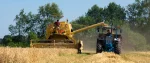
- Local ingredients. More and more Dutch distilleries use Dutch barley. With a few producers, this goes the furthest: the barley is grown on their own land, next to the distillery. This is called single estate whisky.
- Sustainability and transparency. Some Dutch producers deliberately choose B Corp certification, organic cultivation, renewable energy and circular processes. In Scotland this is still rare; here it's gradually becoming a trend.
How is Dutch whisky made?
The basic process is the same as that of Scottish single malt. The barley is first malted: moistened, allowed to germinate and then dried. Next comes the mash: ground malt is mixed with hot water, which dissolves the sugars. During fermentation, yeast converts these sugars into alcohol.
Then comes distillation in copper pot stills, usually in two passes, where only the heart of the distillate (the "heart cut") is collected. After that, the distillate ages for at least three years in oak barrels: ex-bourbon, sherry, port, wine or special finishes. Finally, the whisky is bottled, at the desired strength, and at good producers without added coloring (E150) and without chill filtration.
The major differences between producers lie in the details: the type of barley, the source of the water, the shape and size of the stills, the choice of barrels, the aging period, and the way in which the whisky is or is not filtered during bottling.

How do you taste Dutch whisky?
The style variation within Dutch whisky is large, but there are a few flavor notes that regularly come up. Due to the Dutch climate, many Dutch whiskies are fruity and soft: think pear, apple or apricot. The often-used (first fill) bourbon barrels give caramel, vanilla and honey. Rye or special cask finishes sometimes deliver a slight spice or peppery quality. And because most Dutch maltsters don't work with peat, Dutch whisky is generally less smoky than much Scottish whisky.
A few practical tips for tasting: pour a small amount (two to three centiliters) into a tulip-shaped glass and let the whisky breathe for a few minutes. A few drops of water allow the aromas to open up. Take small sips and let the whisky roll across your tongue before swallowing.

Where do you buy Dutch whisky?
Dutch whisky is available through the webshop or liquor store of the producer itself, through specialized whisky shops in the Netherlands and increasingly also through regular liquor stores and in the hospitality sector. BUS Whisky bottles can be ordered directly through our online liquor store or picked up at our distillery in Loosbroek. Nice to combine with a tour or a visit to the restaurant at the distillery. But BUS single malt and single cask are also available at various locations of Uw Topslijter, Gall & Gall, Mitra and independent liquor stores.
The whiskies of the Low Countries under one roof
The Dutch Whisky Event | June 28, 2026
A sign that Dutch whisky has come of age: in 2026, BUS Whisky is organizing the Dutch Whisky Event for the first time. A two-day event on June 27 and 28, 2026, where whisky makers from the Netherlands and Belgium come together to actively promote the category "whisky from the Low Countries".
The program consists of two parts. On Saturday evening, June 27, the Dutch Distillers Dinner takes place: a five-course dinner for whisky producers and press, with a talk show between courses hosted by Roelof Hemmen and various guest speakers on the whisky market in the Netherlands and worldwide. On Sunday, June 28, the Dutch Whisky Event opens to the public: Dutch and Belgian distilleries present their whiskies to enthusiasts, with tastings, presentations, entertainment and a food court. The entrance fee is 34.95 euros, including ten tasting tokens.
For the whisky sector in the Low Countries, this is a milestone. Never before have Dutch and Belgian distilleries gathered in one place, and never before has the public had the opportunity to taste all these whiskies side by side. The event will be held at the BUS Whisky distillery in Loosbroek.
BUS Whisky within the Dutch whisky landscape
The BUS Whisky story begins in 2013, on the family farm in Loosbroek. Dennis Hurkmans and Ezra Leeger make kirschwasser and cherry liqueur from cherries in their own garden, but can't find a liquor store willing to sell it. When a batch of malt left over from a regional beer project becomes available, they decide to convert it into alcohol in the kirsch distillation kettle. Three years later, in 2016, BUS Whisky is officially founded. At the end of 2019, the first bottle is released.
What follows is rapid growth. International gold, silver and bronze medals in London, Hong Kong, San Francisco and China. A second place in terms of production volume in the Netherlands. In 2025, BUS becomes the first Dutch whisky distillery ever to achieve B Corp certification, and the tenth in the world. The B Impact Score is 89.2 on a median of 80.
What makes BUS unique in the Dutch whisky landscape?
Single estate. We grow the brewing barley on our own land, next to the distillery. An unusual choice in the whisky world: most producers buy malt. By doing everything ourselves, we know exactly what goes into the bottle. We outsource the malting to a specialized malthouse, after which everything comes back to Loosbroek for distillation, aging and bottling.
Wijst water. Loosbroek is located on the Peel Rim Fault, a unique geological line where rare mineral-rich groundwater (wijst water) comes to the surface. We use this water for our whisky. It gives a character that cannot be replicated elsewhere.
Organic and regenerative. Our barley has been SKAL organically certified since 2025. We work according to regenerative agriculture principles, with flower-rich field margins for biodiversity and without artificial fertilizers or synthetic pesticides.
B Corp and ISO 22000. We are the first Dutch B Corp whisky and the tenth worldwide. We are also ISO 22000 certified for food safety, important for our exports.
Craftsmanship by Marcel van Roessel. Our master distiller is responsible for the distillation process and cask selection. Our whisky primarily ages in first fill bourbon and sherry casks, which are personally selected in Scotland and Spain.
Cooperative ownership. BUS Whisky is a cooperative with over five hundred co-owners. This allows us to build whisky not for investors, but with investors who also simply love the whisky.
Host of the Dutch Whisky Event. On June 27 and 28, 2026, we're hosting the first Dutch Whisky Event at our Loosbroek location, bringing together Dutch and Belgian whisky distilleries to jointly put the category "whisky from the Low Countries" on the map.
Beyond the bottle, we offer a complete whisky experience: distillery tours (daily at 4:00 PM), a farm restaurant featuring regional products, an atmospheric B&B, camper spaces and our own theater show, which will tour more than twenty Dutch theaters during the 2026-2027 season.
Frequently asked questions about Dutch whisky
Read all about Dutch whisky here
"The best" is subjective and depends on personal taste. In independent rankings and international competitions, whiskies such as Millstone (Zuidam), Cley and BUS Whisky consistently score highly. BUS Whisky stands out by being the only Dutch B Corp-certified whisky distillery.
The number varies considerably. After a strong period of growth, we're now seeing distilleries closing as well. As of 2026, the Netherlands is home to approximately thirty distilleries that produce whisky seriously. In addition, there are, for example, breweries that take up whisky as a second branch and lay down a few nice casks each year.
Yes. Dutch whisky meets European legal requirements for whisky: at least three years aging in oak barrels of no more than 700 liters and at least 40% alcohol at bottling. Many Dutch whiskies are equated by international juries with Scottish single malt.
At the producer's webshop (such as our online liquor store), at specialized whisky shops in the Netherlands and increasingly at regular liquor stores.
Many Dutch whisky producers work sustainably. BUS Whisky is the only Dutch whisky distillery with SKAL-certified production and also officially organic barley (since 2025). The barley is grown on our own land without artificial fertilizers and synthetic pesticides.
BUS Whisky offers daily tours at 4:00 PM. On weekends there are even multiple options per day. You can also stay overnight at BUS in the B&B, at the camper site or dine in the restaurant. Other Dutch distilleries also offer occasional tours by appointment.
Single estate whisky is whisky where the barley is grown, distilled and bottled in one location. It's comparable to single estate wine or single origin coffee. In the Netherlands, BUS Whisky is an example of a single estate whisky.
The biggest differences are climate (warmer and more variable in the Netherlands, cold and damp in Scotland), traditions (Scottish production is centuries old and more strictly regulated) and style (Dutch whisky is often less smoky and more fruity). In terms of quality, both countries are now comparable. Although Dutch whisky is on average often somewhat younger than Scottish whisky.
The Dutch Whisky Event takes place on June 27 and 28, 2026 at BUS Whisky in Loosbroek. On Saturday June 27, there is the Dutch Distillers Dinner, a five-course dinner with talk show for whisky producers and press. On Sunday June 28, the public event, where Dutch and Belgian distilleries present their whiskies with tastings, entertainment and a food court. The entrance fee is 34.95 euros including ten tasting tokens. It is the first event to bring the whisky sector from the Low Countries together in one place.
Discover BUS Whisky
BUS Whisky combines Dutch whisky with a complete experience. Order a bottle in our online liquor store, book a tour through the most sustainable whisky distillery in the Netherlands, or come dine in our farm restaurant. Also read more about our sustainable production and B Corp status, and join us on June 27 and 28, 2026 for the Dutch Whisky Event.